Smart Factory 4.0

Smart Factory 4.0 helps to monitor the performance of the machine which means tracking the status of the machine, whether the machine is running or is being idle, the machine monitors the speed, temperature, pressure and other parameters. The parameters which the machine can record and what is the purpose of the machine can be done easily.

If you can attach a sensor to a machine, on the level of its automation, one can track the functioning of the machine. Nowadays sensors can track many parameters as many as you desire. The data is recorded by a machine monitoring device and is recorded in the software. This also notifies the person who is operating the machine, so that he can take necessary action. The software cannot operate the machine as it has to be operated manually but it records all the working on the machine. Industry  4.0 is going to digitization and reducing the manpower.
The data on the devices is captured and and review periodically to review the performance of the machines. The software which is showing the data on the screen is designed by our specialized programmers who have been working on it for many years and made the software such which can solve all the digitize all the processes in the industry.

Your customer can exactly know how much material have been produced what is the quality and quantity and can track the material till the time of delivery and til it reaches the customer end. The software also automatically mails and places order for raw material to the vendor, the machine monitoring device tracks the production of the machine and automatically notifies the vendor of the order for the reorder quantity. Each part raw material is imprinted with a unique serial number carved on it as a bar code and that serial number is recorded in the software. If any part is defected its serial number is displayed in the report of defected items and you can check the same batch for the same defect in any other part and replace that parts. The vendor can also use this data to fix the issue. The vendor can also read this data and deducts the value of rejected parts. All the industries who are using industry 4.0 are into digitization and all their working are digitized and they have moved towards digitization.
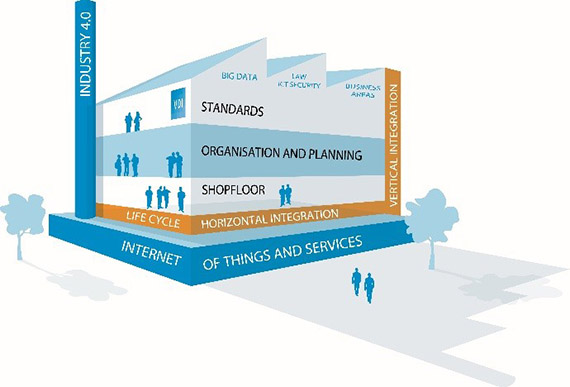
Industry 4.0 Implementation

For implementation of Industry 4.0 two things are necessary:

  1. A machine monitoring device that monitors the data from the machine and stores that data in a common database.
  2. Software that displays the data stored in the database in an efficient manner.

For start using ERP first you need a machine monitoring device that collects the data from the machine and stores the data in the database once this is done you can use that data in any Industry 4.0 applications.

Industry 4.0 involves two different components, the first component involves hardware sensors and cloud computing, the second component involves software for running the company’s different departments: sales, finance, HR, manufacturing etc. The implementation of Industry 4.0 is done in multiple phases, and as you implement each phase you learn from your mistakes at each phase which fine tune the system at each phase.

The first three phases i.e. 1,2 and 3 involves installing the machine monitoring device that provides data to the software. In phase 2 and 3 involves production and productivity monitoring. After implementing these phases it monitors the data 24/7 and sends the data to the database. The last phase is to improve the functionality of the existing ERP or other software and helps to interact with the database.

G.A.POSM enables the software to easily collude with the database of the machine monitoring system. It also enables Industry 4.0 to expand the industry at your own pace. Industry 4.0 helps to automize and monitor the processes in a manufacturing industry.  Once you implement Industry 4.0 in the industry you are sorted and you can sit and relax.

Advantages of Industry 4.0 are as follows:-

  1. Industry 4.0 helps the devices to communicate with each each other with the interference of any third person.
  2. One can monitor the working of the machine in real time and from anywhere and anytime.
  3. IOT helps to monitor the downtime, breakdown time, run time, stoppages, number of items made on the machine, etc.
  4. All the data is stored in database and monitored by a machine monitoring device which helps you to access the real time data and duplicacy is avoided, there is maximum utilization of resources, manpower and time.
  5. Industry 4.0 is one of the change in industry that helps to automize all the operations in the industry.

IOT and Industry 4.0

IOT is the short form for Internet of Things, Internet helps to make different devices communicate with each other using some standard protocols. This Internet has until now allowed only people to communicate with each other and to collect information which is known as Internet of People. For the past few years, things like sensors, manufacturing machines, cars, devices etc. have started communicating with each other. For example, the production on a machine can be monitored using a monitoring device which communicates with the software that displays the readings on the screen.

Internet of People is the past but Internet of Things is the new advanced version which helps devices to communicate with each other like when you are about to reach home and want your room to be cool the GPS system tracks your location and switches your AC on automatically. This is true example of devices communicating with each other.

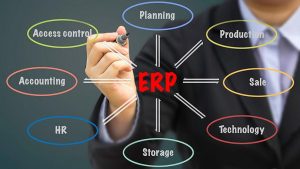
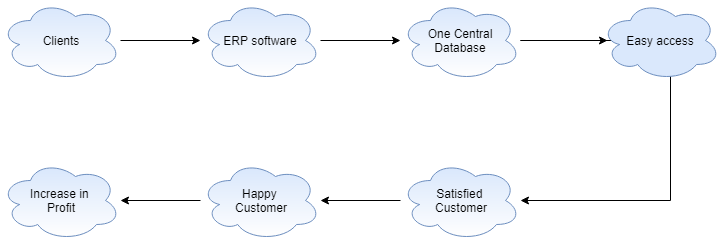
We could think of Industry 4.0 as a ERP software which brings together many technologies like Artificial Intelligence, robotics, sensors, IOT, cloud computing etc. Before the use of ERP there used to be different software’s for sales, finance, stores, payroll, HR, sales but these software didn’t interact with each other, the role of ERP was to bring these software’s at the same place and talk with each other using a common database. ERP software also increases efficiency and reduces manpower.

The origin of Industry 4.0 was with the German project to promote the computerization in manufacturing. This is the fourth Industrial revolution whereas the first revolution was mechanization by steam engines in 1800s, the second revolution was with electricity and the assembly line and the third revolution was with computers and now is the fourth revolution Industry 4.0.

We can say that Industry 4.0 is not a new technology but just binding of already existing technologies and allows them to communicate. Industry 4.0 applications can sense the physical environment, and take intelligent decisions and take action according to that decision. and this application is called Cyber-physical systems (CPS). Examples of CPS  are as follows: Auto-pilot mode in aircraft, driver less car etc.

OSMTM and its uses

OSM (Operating system for Manufacturing) is a system planner that helps to organize the business in its unique way. It streamlines all the processes in the company and maintains a record of all the data in the company. OSM and its uses are many and can solve all your business problems. Imagine of OSM system as a glue stick which enables the user to combine all the processes in a software system. All the requirements of the company can be easily customized through OSM. Operating system for Manufacturing is the heart of a business enterprise without which the working of the enterprise is halted. The OSM automates the back-office operations and for an Manufacturing unit ERP is dead and long live OSM (Operating System for Manufacturing).

ERP and its uses

It involves the use of software which is very smart enough to understand and does it work on its own. The idea that is involved in making OSM is to automatize the work processes. The assets and liabilities involved in the industry are also tracked time to time. Executives and Managers always want data in real time which can be accessed from anywhere and at anytime so they expect that OSM can be accessed from mobile or tablet.  All the data in the system is accurate and systematic without any interference. Our team of experts help you to choose the right OSM and implement it properly. The monthly MRP can be calculated on a single click with the help of OSM software and profit and loss analysis can be done easily.

OSM suites

OSM is the management of resources of business. OSM consists of various suites of different departments. Operating system for Manufacturing suites have the capability to manage all the work of the department. Suites are generally related programs which are sold together in a single package. These suites integrates the working of various departments. For working in these suites requires education in its use and involves investment in resources.

IT is the fast growing and dynamic industry and we know it very well. IT industry keeps on innovating itself. Now what is the need of OSM system in business?

Most companies use Operating system for Manufacturing to manage their organisation at the same place and time. OSM has been designed to organize all the processes at the same place. There is the need to automate various processes in the organization and to realize that the processes like accounting and finance can also be done through OSM. All the modules are priced differently and are made available to the customer as per their needs.The support provided by the OSM software is very reliable and unique.

How to use OSMTM software

Firms all across the world are adopting technology, any company which is using a combination of processes i.e. accounts, human resource and marketing can take advantage by bringing all of them together. OSM helps employees to work more efficiently and effectively.

Employees will be able to access real-time data of their departments as well as of other departments, they can benefit from this data by taking right decisions. They can also more effectively coordinate with each other. OSM systems brings all the processes in the company under one roof and you can access all the information about any process from OSM. At first glance, OSM seems to be easy and thought of just a planner of one’s business but actually it is more than that as it gives a complete picture of one’s business. ERP systems helps to reduce complexity and increases profit.

For using OSM it is not enough to just install the software and read the user manual for using it. Organisations which fail to get the advantage of the OSM software cannot increase their profits and data accuracy. Operating system for Manufacturing can also be as dangerous if not implemented properly and used in the right way as the amount of investment done in the software is not less and its a huge loss if you are not taking any benefit from it.

How to use OSM software?

Open source OSM systems are usually free and requires no costs or maintenance fees. With the help of open source software you are not depending on any vendor of how to use OSM software and are free to use it anytime any anywhere. One can do it by himself or you can hire a OSM solution provider that’s the reason one need to chose open source software. G.A.P ERP is very simple to use and implement it only requires a few click and you are done with your work and get any report you desire to from ERP. You can have labels for your company designed easily and does not have to pay a penny.

how to use ERP software

OSM functions

OSM stands for Operating system for Manufacturing which supervises the processes of the business entity. All the processes are integrated and structured and organised in a proper manner.In the modern era of technology there is need of a system which helps to supervise the work and will store the data online. OSM functions for all the organisations and helps to recover all the data which was used by the old system.

ERP is a software that is the shorter version of OSM. This is what an Operating system for Manufacturing does.

  • An OSM software is an Operating System for your Business.
  • We provide one of the best OSMs.
  • It creates systems for all your business activities like Sales, Accounts, Purchase, Inventory Control, Manufacturing, Quality Assurance, HRD, Payroll etc.
  • Each Activity, although is handled individually is integrated in a way that a common centralized database is used to control and support all the activities.
  • This way, the data collected by one department is used by the other departments to make decisions or course corrections.
  • This helps in reducing your production time, development time,  enhancing your personal abilities and  giving you more time to think and to relax.

Types of ERP Architecture?

ERP system might appear to be complex but that’s not true as ERP is a simple solution to one’s business and helps to organize the data quickly and properly. ERP software is considered an enterprise application, that is software specially designed for large businesses and requires dedicated teams to customize and analyze the data and handles updates. 

ERP software and its vendors should be environment friendly. It is less complex and more user-friendly. ERP integrates various functions into one system and streamlines processes across the entire organisation. ERP has the power to manage all the processes of the business. It helps in production and process planning and better resource planning of the business.

ERP architecture

ERP (Enterprise Resource Planning) has different types of architecture or tiers and can be classified into three categories. These architecture are flexible and scalable, and are easily customized according to the customers needs. The data is kept secure and easily accessible anytime and anywhere.

ERP system project helps decision makers to make decisions faster based on the information which is available to them easily, consistently and timely. ERP standardizes business processes and the data definitions into a integrated environment. A primary benefit of ERP is easier access to reliable, integrated information.

More important than the ERP name and international footage is the proximity, approach ability and the willingness of the ERP provider to work with you to find in depth solutions for your problems.

The knowledge strength, specially the Domain knowledge of the ERP provider is very crucial to your successful implementation of the ERP .

The ERP itself should have the following strengths:  

  • Functionally deep.
  • Simple to use.
  • Accessible  from anywhere.
  • Data secure.
  • Quick to Implement.
  • Easy to configure for specific needs.
  • Helps companies to adopt best business practices.

ERP uses a database and variety of architecture to manage the organisation. ERP provides optimized solution to and covers implementation, consulting, operation and maintenance of enterprise users. They also provide technical support by providing solution to the problems of the customers.

ERP system project helps decision makers to make decisions faster based on the information which is available to them easily, consistently and timely. ERP standardizes business processes and the data definitions into a integrated environment. A primary benefit of ERP is easier access to reliable, integrated information.

More important than the ERP name and international footage is the proximity, approach ability and the willingness of the ERP provider to work with you to find in depth solutions for your problems.

The knowledge strength, specially the Domain knowledge of the ERP provider is very crucial to your successful implementation of the ERP .

The ERP itself should have the following strengths:  

  • Functionally deep.
  • Simple to use.
  • Accessible  from anywhere.
  • Data secure.
  • Quick to Implement.
  • Easy to configure for specific needs.
  • Helps companies to adopt best business practices.

ERP uses a database and variety of architecture to manage the organisation. ERP provides optimized solution to and covers implementation, consulting, operation and maintenance of enterprise users. They also provide technical support by providing solution to the problems of the customers.

ERP and CRM systems

ERP is the full form for Enterprise Resource Planning system which is used to manage business activities of an organisation. ERP software helps to implement all the activities in an easy and automatize manner and also gives you a planned way of how to utilize the resources of the company. CRM is the full form for Customer Relationship Management and refers to the practices of analyzing and managing the customers interactions all the data of the customers is stored in ERP.

The various customer interactions can be recorded through ERP. These interactions can be phone calls, email, message or face to face interaction. The major benefits of ERP are customer satisfaction, better performance, quick action, time saving, high productivity and inventory control.

The work of ERP and CRM systems can be done by the G.A.P OSM software as it helps to manage both the logistics as well as non-logistics part of the organisation. The main components of OSM are-

  • Accounting
  • Manufacturing and Distribution
  • CRM
  • Human Resource with Payroll features
  • Stock and Sales figures

ERP and its features

ERP and its features are as follows. G.A.P OSM helps the Industry to meet the existing and future challenges:

• Reduces Time to Market ( Better controls on Design, Development, Production and Right First Time)
• Enhances Flexibility ( Fast Change Management / Response to changing Customer needs )
• Improving Quality ( of Products, Services, Communication and almost everything that you do )
• Increasing Efficiency ( of Men, Machines and Money )
• Reduction in Cost ( for making you competetive and more Profitable )

And all this in a simple user friendly way that is easy to own, install, implement  and control. Suitable for both Big and Small Businesses. It is available both on the cloud as a SAAS model or a full On-Site installation.It is Browser based and accessible from anywhere and using any device ( PC, Laptop, Tablet or Smart Phone ). It has configurable security setup for ensuring data safety.

G.A.P-OSM includes the following features :

  • Inventory & Warehouse
  • Purchase Management
  • Finance & Accounting
  • All inclusive HRD
  • Punch to Salary Payroll
  • Legal Compliance
  • Quality Management
  • e-CAPA
  • Operational efficiency monitoring
  • Online M/c. Monitoring in real time
  • Total Productive Maintenance (TPM)
  • Product costing
  • Activity based Management
  • New Business Development
  • New Product Development
  • Product Life Management
  • Production Planning & Execution
  • Sales Management
  • Data and Knowledge capturing
  • Document Control

We also design and develop customized hardware ( IOTs, Connectivity ) to capture your data and make it available for monitoring, improved controls and analytics.

ERP strategy

ERP stands for Enterprise Resource Planning and is used to drive the business to new heights and helps to successfully store the data online. ERP strategy is also an essential feature for implementing an ERP. ERP in MIS is an important feature for the company. MIS is Management Information System for the managing the information or data of the company. Before implementing ERP one has to understand what is ERP technology. ERP when implemented in an organisation it helps to decrease the unnecessary expenses and increase the gains from the company.

Open source web based ERP has the potential to communicate with all the departments. ERP software helps to implement all the functions of the company. The benefits of implementing an ERP systems are as follows:-

  1. Better customer satisfaction
  2. Better Productivity
  3. Greater Information
  4. Decreases in time to market

ERP business benefits

ERP solution helps to automate and supports a wide range of administrative and operational processes of the business across various industries. Choosing an ERP is like getting married and choosing the right one for you, if you choose the right one you will live happy and successful. If you are nervous in choosing an ERP it means you are on the right path and heading towards a beautiful life. But, if you choose the wrong ERP you will have to regret and may have to get a divorce that means you may have to choose another ERP so the choice of ERP must be with lots of care.

Planning is the foremost activity that should be done for implementing ERP. We can define ERP systems as systems which uses single, comprehensive database management system. Analyzing data and tool reporting are an important part of the ERP system. ERP helps to maintain the data in an organised manner. ERP also help one to make profit in his/ her business as ERP helps to streamline all the processes and make decisions in an efficient manner.

Planning is an important part before implementing and using ERP as planning is the first step to use Enterprise Resource Planning. ERP also analyze the ups and downs in the business and also enables you to take right decisions. In an industry which is using ERP is more profitable than the one which is not using ERP.

The ERP software helps you to have a clear hierarchical picture of the business organisation. Enterprise Resource Planning creates the complete structure of the organisation on a single screen. Software-as-a-Service (SaaS) service is an important feature of ERP. All the data is kept secure and online without the intervention of unknown intruder.

ERP business benefits

Real-time ERP

Enterprise Resource Planning helps to access real time data across various departments and provide easy accessibility and visibility to the data. One can make data-driven decisions and can manage the performance of the employees. If you are a startup and have a growing business then ERP helps to easily manage every aspect of the business. Huge enterprises use Internet of Things to connect physical devices with each other and helps to exchange data among them.

We are using one of the latest technologies and are growing with these technologies. With the help of OSM one can take the business to a success. With the help of ERP one can use the real time data and make decisions according to that data. One can also manage the data from anywhere and anytime one need not to be in office every time. All the data remains secure and can be accessed only by the people whom you want to.

When the data is stored in real time ERP the data of previous years can be accessed anytime without having to work hard for searching the registers. One can also spin around the business with the help of ERP and all the transactions can be recorded at real time. ERP helps to track  suppliers, materials and production. It also reduces time complexity which helps in better solutions. It provides 24*7 customer support for greater customer satisfaction and retention.

OSMTM

Industry 4.0 creates a cyber twin for your factory / organization. Which means that all the processes as they happen in the real world can be digitally viewed and monitored and also acted upon from any where in the world.

The main purpose of Industry 4.0 is to enhance Productivity.

OSMTM does the same. In effect, it immediately transforms your Industry to I4.0.

OSMTM (Operating System for Manufacturing) is a collection of the best Industrial and Business practices followed internationally. These processes have been defined in the software. As such any organization that implements OSMTM does not need to redefine and document the processes. The implementation becomes easy as it is software driven. The data created as a side product of following the process is available for analysis, reporting and sharing with other persons who may need this information to forward their own process .

OSMTM has the ability to get high class performance from mediocre employees and of course extra high class performance from your smart and knowledgeable employees .

The NPD (New Product Development) module for instance, can convert your normal engineers into Product Designers. They will use the APQP (Advance Product Quality Planning) system for Product Design, Process Design, Development, Verification , Validation and Continuous Improvements. They will be able to get the PPAP (Production Part Approval Process) documentation all ready, and all this without having a deep knowledge of these subjects.

The same data that has been created during the Product Development is used subsequently by the PLM (Product Life Management) team, the Manufacturing team as well as the Quality Assurance team .

Your HR team is able to follow, implement and monitor the world best HR practices. Normally organizations hire expensive external consultants to help them formulate HR policies, procedures and manuals.

Your accounts executives become masters of finance and GST by using the Finance module of OSMTM .

Your Maintenance team can very easily implement TPM (Total Productive Maintenance) in your organization by using the TPM module .

Managing Legal Compliance , Control on Inventory (ITR), Managing your Assets, Improving your Business by NBD (New Business Development) module and almost all other processes required by an Organization can be done by using OSMTM .

The Advanced Visualization Dashboard (AVD) of OSMTM allows you to see all your critical and mission important measurable in one place. It also allows you to zoom in from the Macro level to the Micro level.

Industry 4.0- Digitization in Manufacturing Technology

There have been changes in the industry regularly, the first change in revolution was industry 1.0 which included moving from hand production components to machines, the second industrial revolution was in 1870 which started the use of electricity, the third revolution in industry involved the use of electronic and IT systems and now comes the fourth revolution i.e. Industry 4.0.

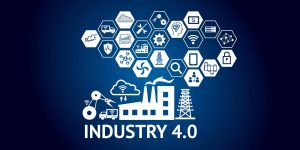
Industry 4.0 is a name for the current trend of automation and data exchange in manufacturing technologies.

It includes Internet of things, Internet of things (Iots) is the tangle of physical devices, home apparatus, and other items lodged with electronics, software, sensors, and network connectivity which enables these devices to link with each other and exchange data. The Iot network allows the objects to be sensed from your existing network.

Iots will  help to increase so much business value of the company that has lead to fourth revolution which is known as Industry 4.0. It is also estimated that Internet of things will take your business to another level and increase revenue by improving productivity. The potential of  the business will definitely improve with the implementation of Internet of things (Iots).

When the movement of machines, products, orders is observed from anywhere and anytime in a manufacturing industry there is increase in profit and productivity enhances. An Iot is an intelligent management system that requires no extra efforts. These Iots are inexpensive and are easily affordable for a manufacturing unit that will definitely increase the revenue of the industry. The Internet of things is the growing network of physical objects.

The term ‘Internet of things’ helps in computerization of manufacturing operations. The scope for internet connected devices is extensive.

OSMTM is a ready made solution to make your factory a Industry 4.0 / Smart Factory.

OSMTM is about “Digital Management”